 FourFaith IoT
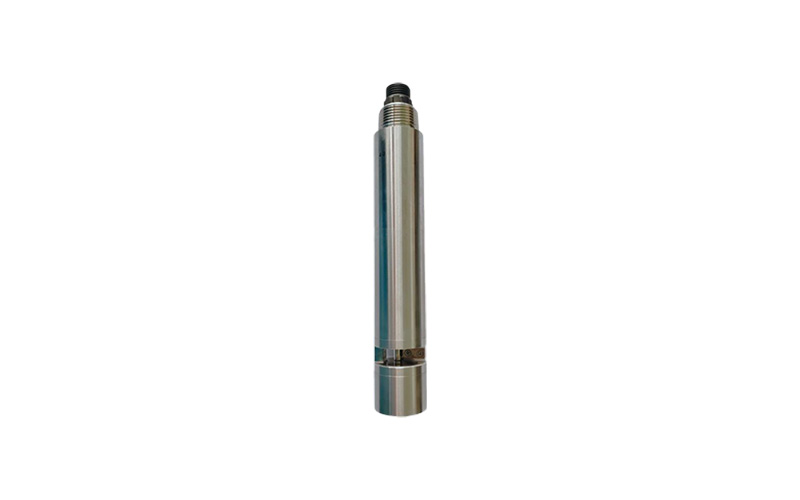
Dual-optical-path detection of COD, turbidity and water temperature; built-in algorithm for automatic compensation of turbidity interference; Pt100 automatic temperature compensation; customisable automatic cleaning cycles and number of brush strokes; independent two-point calibration for COD, turbidity and temperature; Modbus read/write access to multiple sets of monitoring data; modification of device address and switching of communication baud rate.
Optional 4–20 mA analogue signal output; customisable cable lengths available.
The F-IWQ1506 utilises a dual-wavelength UV absorption detection principle and is equipped with a dual-optical path compensation algorithm to simultaneously measure COD, water turbidity and water temperature;It features a built-in automatic cleaning brush that requires no chemical reagents; automatic turbidity compensation eliminates interference from suspended solids; the integrated 316 stainless steel probe enables long-term online monitoring, eliminating the need for frequent manual cleaning and reducing reagent procurement costs, thereby significantly lowering the operational and maintenance costs of long-term water quality monitoring.
Reagent-free UV detection solution, eliminating secondary pollution and saving on the costs of reagent procurement, storage and waste liquid disposal;Dual-optical-path design, with one path measuring organic matter and the other measuring turbidity; the algorithm automatically compensates for measurement deviations caused by suspended sediment;Integrated motorised cleaning brush that automatically wipes the optical window at set intervals, reducing the frequency of manual cleaning on-site;Three COD measurement ranges, each paired with a corresponding turbidity range, suitable for a wide range of scenarios from lightly polluted surface water to high-concentration industrial effluent;Corrosion-resistant 316 stainless steel housing with 3/4 NPT standard threaded submersible installation, ensuring long-term stable operation underwater;Standard Modbus RTU bus, with optional 4–20 mA current output, compatible with a wide range of industrial control data acquisition devices worldwide;Low-power operation design, suitable for remote solar-powered water quality monitoring stations without mains electricity;Minimal long-term measurement drift and fast response times; seal components require factory servicing only every 18 months, ensuring a long maintenance interval.
| Measurement parameters | COD, water turbidity, water temperature | COD three-range measurement | 0–200 / 0–500 / 0–1500 mg/L |
|---|---|---|---|
| COD accuracy | 0–500 mg/L ±5%; 1000–1500 mg/L ±5%; other ranges ±10% | COD resolution | 0.1 mg/L; lower limit of detection 0.2–0.4 mg/L (depending on range) |
| Turbidity range | 0–200 / 0–400 / 0–1000 NTU, accuracy ±5%, resolution 0.1 NTU | Temperature range | 0–45 °C, accuracy ±0.3 °C, resolution 0.1 °C |
| Response time T90 | <30 s | Calibration method | Two-point calibration for COD and turbidity respectively |
| Self-cleaning | Built-in motorised brush; cleaning cycle adjustable from 6 to 6,000 minutes | Interface type | 5-core M16 waterproof shielded cable; RS485 as standard, 4–20 mA optional |
| Communication protocol | Modbus RTU, default 9600 8N1 | Power supply and power consumption | DC 12–24 V; 0.4 W during operation, 2 W during cleaning |
| Housing material | 316 stainless steel, pressure rating ≤0.2 MPa | Operating temperature | 0–45 °C; storage temperature: –5–65 °C |
Online monitoring of organic matter in municipal sewage, industrial effluent, river and surface water, lakes and reservoirs, and piped water networks.
A It employs a dual-optical-path structure comprising a UV measurement beam and a turbidity reference beam. A built-in algorithm automatically corrects COD measurement results in real time based on turbidity values, thereby offsetting interference from suspended impurities.
A The cleaning interval and number of rotations can be customised via communication registers; after 18 months of continuous use, the unit must be returned to the factory for replacement of the dynamic sealing components; damaged brushes can be replaced individually.
A Calibration sequence: temperature first → turbidity next → COD last; the COD standard solution is prepared using KHP reagent; the diluted solution must be used within 24 hours, whilst the concentrated solution should be stored at a low temperature away from light.
Send your project parameters, our engineers reply within 24 hours.
Get Free Quote